Licensed & Insured • Serving All of Hampton Roads, VA
Storm Damage Roof Documentation
After a storm, Harbor Guard documents visible roof damage with photos and explains what we find, so you have clear information for your insurance conversation.
Virginia Licensed & Insured • Installs GAF & Owens Corning Systems • Local & Owner-Led • Storm & Insurance Claim Help • Financing Available
Updated October 20, 2026. After a storm, Harbor Guard documents visible roof damage with photographs and explains the findings so homeowners have clearer information for the repair estimate and their insurance conversation.
What should I do first after possible storm damage to my roof?
Protect people first, contact your insurer promptly, record visible damage from a safe location and keep the paperwork for temporary protection and repair estimates. Do not climb onto a storm-damaged roof to collect evidence. If there is a falling-tree, electrical or unstable-building hazard, keep clear and contact the appropriate emergency or utility service.
The Virginia SCC disaster-loss guide recommends prompt insurer contact, photographs and records of expenses. It distinguishes temporary protection from final repairs: document the condition before temporary work when safely possible, retain receipts and coordinate permanent repairs with the insurer’s inspection needs.
Storm damage photo checklist for homeowners
Start with an overview that identifies the affected part of the home, then record the visible detail. A close-up without a location can be difficult to match to the repair scope later. Keep original files and add notes separately; do not alter a photo to suggest damage or certainty that it does not show.
| Record | Useful detail | Keep the description factual |
|---|---|---|
| Exterior overview | Which side of the house or roof area is affected, photographed from safe ground. | Record visible missing material or impact; leave inaccessible areas for a professional. |
| Interior water signs | The room, ceiling or wall location and when water or staining was first noticed. | A stain shows a condition; it does not by itself prove the entry point or date of damage. |
| Loose material or debris | Where shingles, ridge pieces or branches were found. | Note what you observed without moving into an unsafe area to obtain a closer image. |
| Temporary protection | Before/after photographs, work date and the area covered or secured. | Identify the work as temporary rather than a completed permanent repair. |
| Inspection findings | Photo references that match the roof area and written findings. | Separate visible conditions from suspected causes or concealed areas not inspected. |
| Repair paperwork | Estimates, invoices, receipts and approved changes, saved with the photographs. | Keep temporary protection, permanent roof work and unrelated improvements distinguishable. |
FEMA’s severe-weather documentation guidance also emphasizes photographs or video, retaining repair receipts and following official instructions about safe reentry. That guidance includes flood recovery; a documentation checklist does not establish flood coverage under a homeowners policy.
What Harbor Guard documents during a storm-damage roof inspection
Our roof inspection and documentation focus on visible conditions, including missing or damaged shingles, ridge caps, flashing, pipe boots, debris impact and accessible signs of water entry. We explain what the photographs show and prepare a written repair or replacement estimate. See the roof inspection process for more about the assessment.
Tell us where you saw water first and whether the roof has had previous repairs. Earlier photographs, invoices or inspection reports can provide useful context. A mark noticed after a storm is not automatically proof that the storm caused it, and the visible surface does not reveal every concealed condition. If additional damage becomes apparent during work, it should be documented and addressed through an explained scope change.
A useful inspection record connects four things
- Location: the roof section, penetration or interior area being discussed.
- Condition: what is visible, including any limitation on access or visibility.
- Photo reference: the image that illustrates the finding.
- Proposed work: the repair or replacement item associated with that finding.
This makes it easier to ask a practical question: “Which item in the estimate addresses the condition in this photograph?” It also helps distinguish a targeted leak repair from a larger roof replacement.
Temporary roof protection and permanent repairs are separate steps
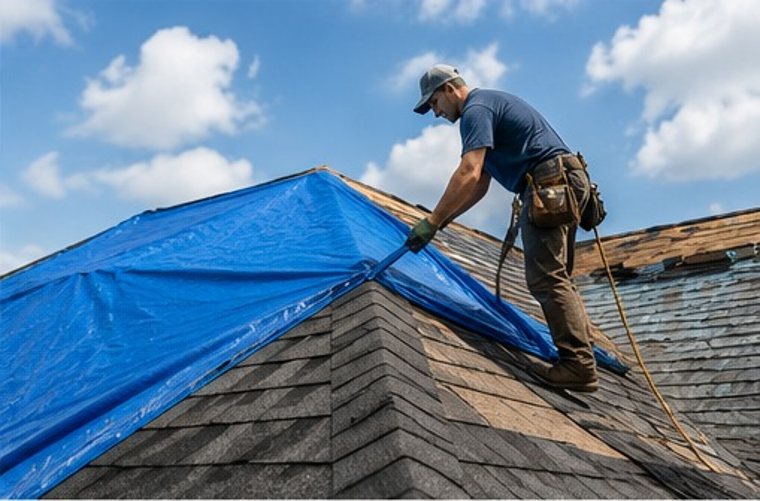
If an active roof leak needs temporary protection, ask about emergency tarping when you call. Explain whether water is entering now and whether a tree or electrical hazard is present. Access, weather, roof condition and available crews affect what can safely be done and when. Temporary protection does not establish the final repair scope or replace permanent work.
Ask for a clear record of the temporary work and its cost. For permanent repairs, keep the written scope and any revisions together. Discuss the insurer’s inspection arrangements before removing evidence or committing to the final construction scope. The SCC guide explains why documentation and communication matter during this transition.
Does homeowners insurance cover storm damage or roof replacement?
Coverage depends on your policy, the cause and extent of damage, exclusions, deductibles and the insurer’s assessment. A roofing estimate does not decide coverage. A roof’s age, a visible leak or a storm date alone does not establish an entitlement to a replacement.
The Virginia homeowners insurance guide explains that policies differ in covered causes of loss and that separate wind, hail or hurricane deductibles can apply. It also notes that flood, surface-water and storm-surge damage generally require separate coverage. Ask your agent or carrier which terms apply to the actual loss.
Questions to take to your insurer include:
- What photographs, inspection records and estimates do you need?
- Do you need to inspect before final repairs or before damaged materials are discarded?
- Which deductible and policy provisions apply to this reported event?
- How will temporary protection and any later-discovered damage be reviewed?
- What written authorization or next step should I keep for my records?
What is Harbor Guard’s role in the insurance conversation?
Harbor Guard is a roofing contractor, not a public adjuster or attorney. We document roof conditions, explain the proposed construction work and provide a written estimate. When appropriate, we can meet an insurance adjuster at the property to point out the conditions we observed. We do not decide claims, interpret your policy on your behalf or promise an approval or payment.
If the insurer’s scope and the proposed roof work differ, ask for the specific disputed or missing items to be identified in writing. Keep the carrier’s response with the inspection record and estimate. For insurance questions or unresolved concerns, use the Virginia SCC Bureau of Insurance resources.
Build one storm-damage project folder
- A brief event and observation log, including when the problem was first noticed.
- Original photographs and video, labeled by area.
- The roof inspection findings and written estimate.
- Temporary-protection invoices and payment receipts.
- Insurer contact details, claim reference if one is opened, and written instructions.
- Approved construction changes, applicable permit records, completed-work photographs and warranty documents.
The goal is a record that another person can follow without guessing. Keep the original facts, the proposed work and the insurer’s decisions identifiable.
Storm damage documentation questions
Can I document damage without climbing onto the roof?
Yes. Start with photographs from safe ground and accessible interior areas. A professional can assess roof areas that you cannot safely reach.
Should I wait to address an active leak until the adjuster arrives?
Contact your insurer promptly and ask about temporary protection. The SCC advises protecting property from further damage and documenting temporary repairs. Keep safety and permanent repair authorization separate.
Does a photo report guarantee insurance approval?
No. Photographs and an estimate explain observed conditions and proposed work. Your insurer evaluates coverage under the policy.
Is the inspection and estimate free?
Harbor Guard offers a free, no-obligation roof inspection and written estimate. Ask what the inspection will cover and request pricing before authorizing temporary protection or repair work.
Request roof documentation in Hampton Roads
Call 757-239-0707 and describe the roof issue, property city and whether water is entering now. Harbor Guard provides storm damage roofing assessments across Hampton Roads, including Virginia Beach, Chesapeake and Norfolk.
Ready for a roof that holds up to coastal Virginia weather?
Talk to a real Hampton Roads roofer today. Free inspection, honest quote, no pressure.
Harbor Guard Roofing
Call or text (757) 239-0707 · admin@harborguardroofing.com
Mailing address: 550 First Colonial Rd, Virginia Beach, VA 23451 · Virginia Licensed & Insured